Objects · CR-0001
Freshwater Pearls
Cultured mussel pearl, Lake Biwa lineage, knotted on silk.
- Collection
- Objects
- Origin
- Japan / China, 20th century onward
- First observed
- 2024-03-11
- First published
- 2024-06-02
- Last revised
- 2026-01-19
- Status
- In the archive · open to revision
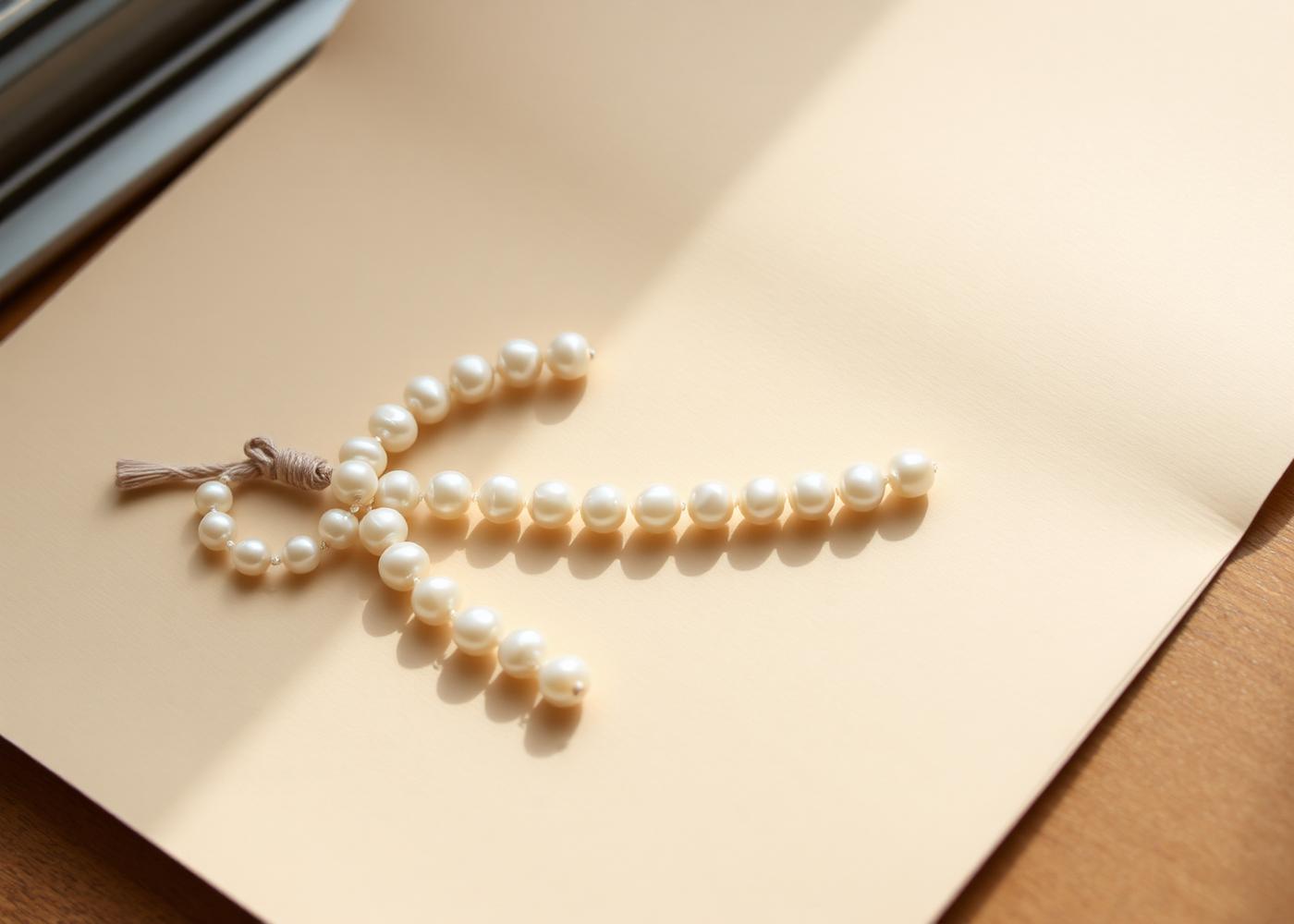
Generative model, no photographic original
What is it made from, where did those materials come from, and what did their production cost?
Nacre laid down in microscopic layers by a mollusc responding to an irritant. The colour is not pigment but interference — light caught between sheets of aragonite. Freshwater pearls are almost entirely nacre, which is why they survive being worn daily.
Whose hands made it, what techniques were used, and how was that knowledge transmitted?
Grafting a single mantle tissue fragment into a mussel is surgery performed thousands of times a day by hand. The strand that follows is knotted between each pearl so that a broken silk loses one, not forty.
What does its presence mean, to whom, and how has that meaning changed?
The pearl moved from a symbol of imperial rarity to something a grandmother leaves behind. Cultivation democratised it, and in doing so changed what it means to inherit one.
What ecological, economic, political, or logistical systems must exist for this to exist?
A pearl farm is a freshwater ecosystem under management: water quality, mussel health, and three to six years of patience before anything is sold. It is one of the few luxury supply chains where pollution destroys the product first.
What does it ask of or do to a body, a place, or the senses?
Warm against skin within seconds, unlike glass or stone. The knots make a strand fall in a curve rather than a line.
Provenance and method
Research methods
- Field observation
- Interviews
- Published-source research
- Documentary photography
People consulted
- A. Okada, pearl setter (Manhattan) — technique and restringing intervals.
Sources
- 1Published sourceGemological Institute of America, notes on nacre formation and pearl cultivation.
- 2Interview or oral historyPearl setter, Manhattan jewellery district, recorded conversation, March 2024.
- 3Personal experienceTwo inherited strands, worn and restrung over eleven years.
Revision history and errata
2 recorded revisions
This entry can change. Every correction is dated and described here; earlier text is never quietly removed.
- First published
- 2024-06-02
- Last revised
- 2026-01-19
- Corrected the claim that all freshwater pearls are beadless; some are nucleated. Added the restringing interval.
- Added the Culture lens after the interview in March.